I've had a couple of goes of constructing a formal definition of ecologies of possibility, but as yet I think it's a little early to offer something really nailed-down. It's an ongoing process and I'll check in here to refine, polish, deconstruct and reconstruct definitions as they occur to me. Stab #1 An ecology of... Continue Reading →
To-Do List for the Concept Ballroom
Ecologies of possibility, as a debutante concept, is at risk of entering the concept ballroom and immediately treading on toes and making embarrassing faux pas. In order to save face and to be accepted onto the concept circuit, some considered engagement is going to have to take place with those who already know the score.... Continue Reading →
A Case of the Social: The times, agency, the mainstream and discipline
I like to think about an ecology of possibility as a 'case of the social'. I once misread an article by John Pløger as stating that Foucault considered his concept of 'dispositif' (an apparatus of discourses, norms, technologies, objects etc. comprising some element of strategic organisational concern, e.g. 'Transport') as pertaining to any given 'case... Continue Reading →
Ecologies of Possibility: Interpretation of a bit of a road
The phrase 'ecologies of possibility' popped into my head when walking around Manchester, doing fieldwork for my PhD. I was trying to conceptualise the way different traces of different eras of living are layered in the built environment, representing different rationalities of governance, different sets of material conditions, different possibilities for what might be. I'd... Continue Reading →
Case 1: On the way to Piccadilly
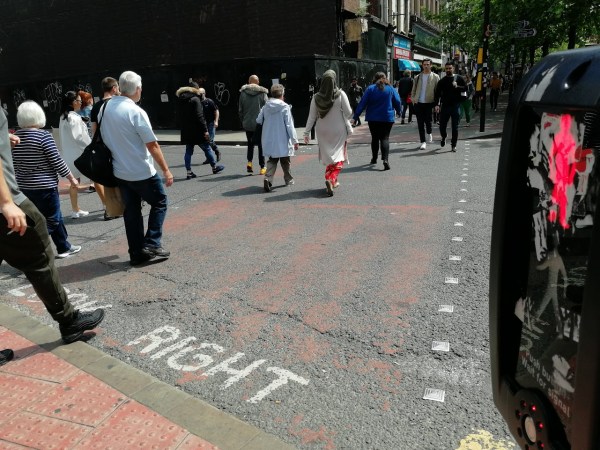
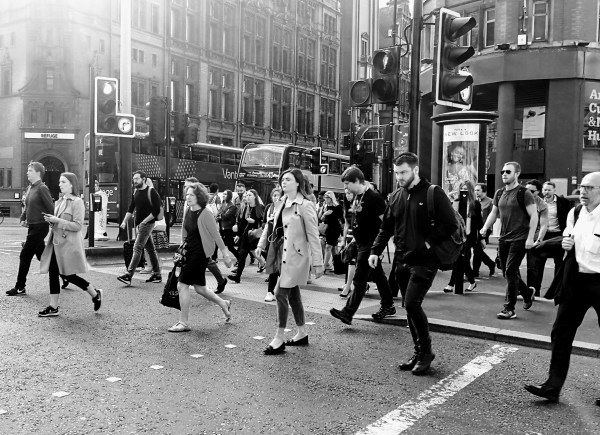
There's a series of pedestrian crossings on the way to Piccadilly Station in Manchester where, due to the high flows of pedestrians at certain points in the day, there tends to be a fairly chaotic relationship between pedestrians and traffic. This stretch of street, the passing pedestrians, drivers, vehicles, the intersecting junctions and the infrastructure... Continue Reading →
From Blasé to Involved: The politics of unveiling particularisation and involvement in urban experience
For Georg Simmel, the ‘blasé attitude’ which modern city life had caused people to adopt, was both necessary and limiting (Frisby, 2002; Allen, 2003). It provided a necessary means of affording cognitive navigability to urban space through limiting the ingress of stimuli into the urban subject’s field of awareness. This made urban life possible and... Continue Reading →